
experiment · self-initiated
deep cuts
a curiosity machine that turns exploration into collectible artifacts.
- role
- design + systems, built with ai
- context
- self-initiated · experiment
- year
- 2026
about
we have unlimited access to information and very few ways to preserve the paths that lead us through it. most ai tools optimize for answers.
deep cuts is a curiosity machine that turns exploration into a collectible object. you navigate a series of ai-generated connections, curating your own path, and the finished journey prints as a receipt and goes into a permanent archive. a mixtape for the mind.
credits
- creative direction, strategy, systems architecture, ui/ux
- evana sajan
- eng development
- claude, openai
- design inspiration
- teenage eng.
try it
open full screentype a word, or take one of the presets, then press the dial. five stops later it prints a receipt and files it. the red dot opens the archive.
the loop, in three stills
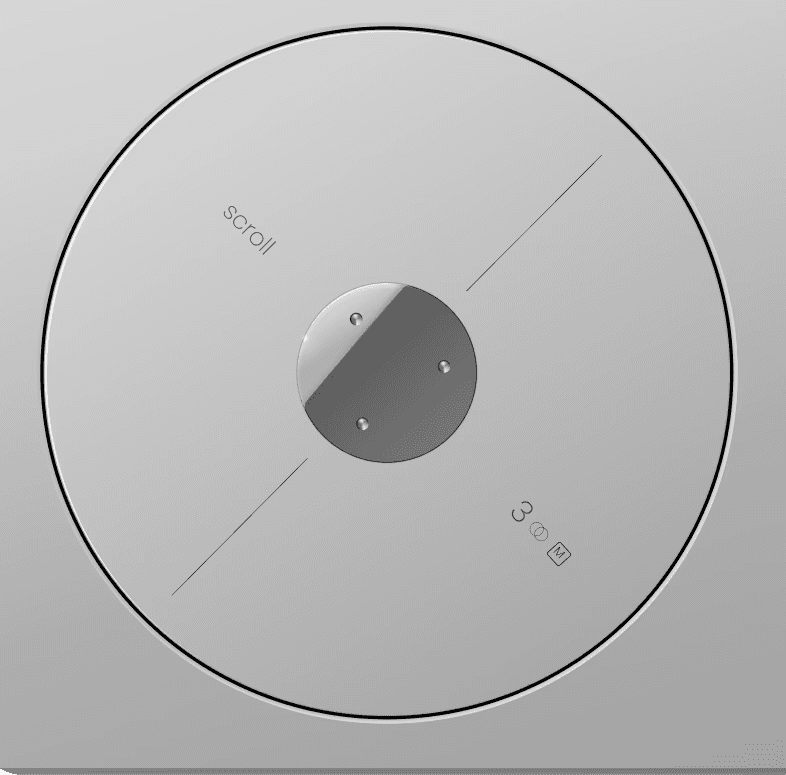
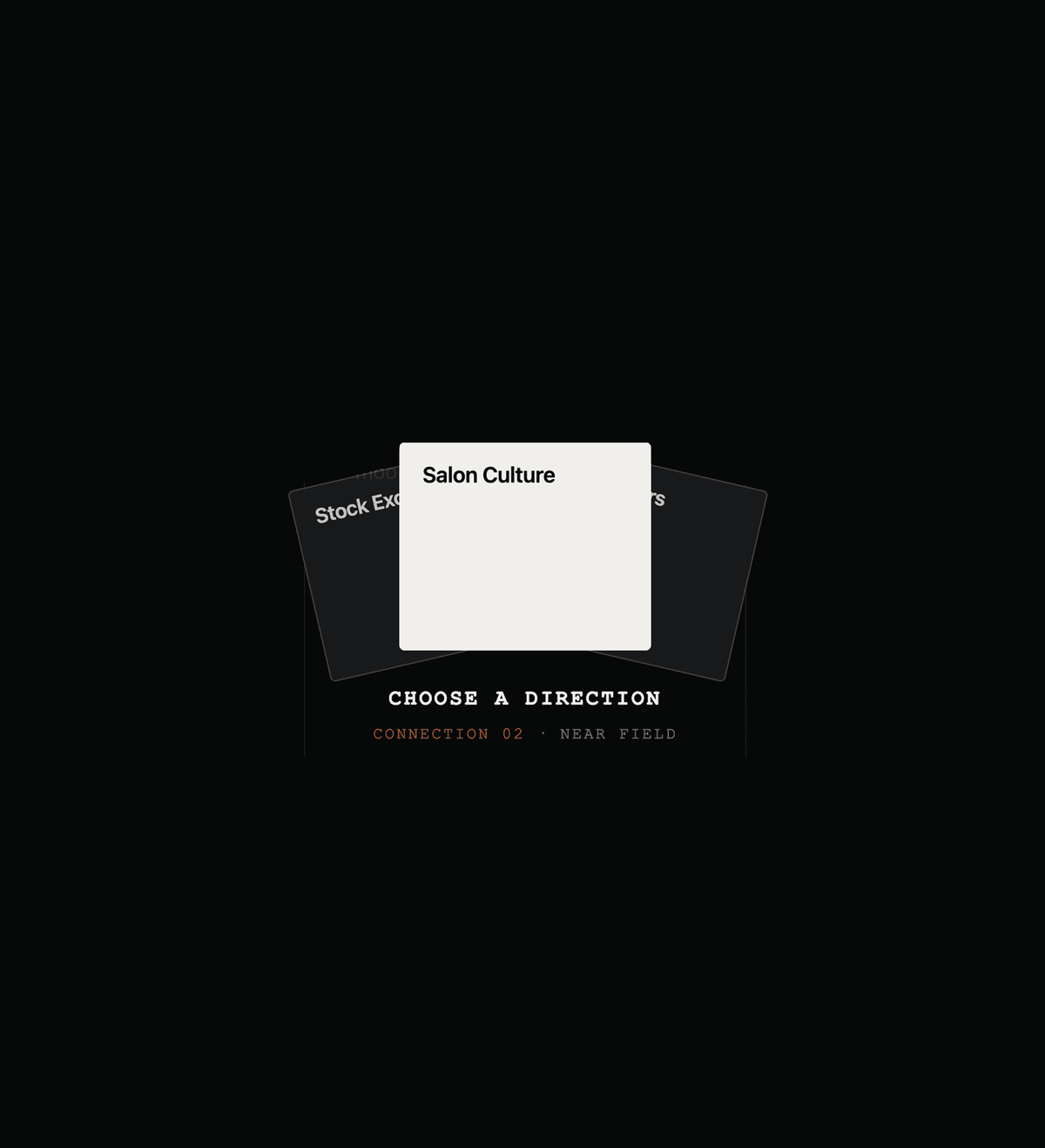
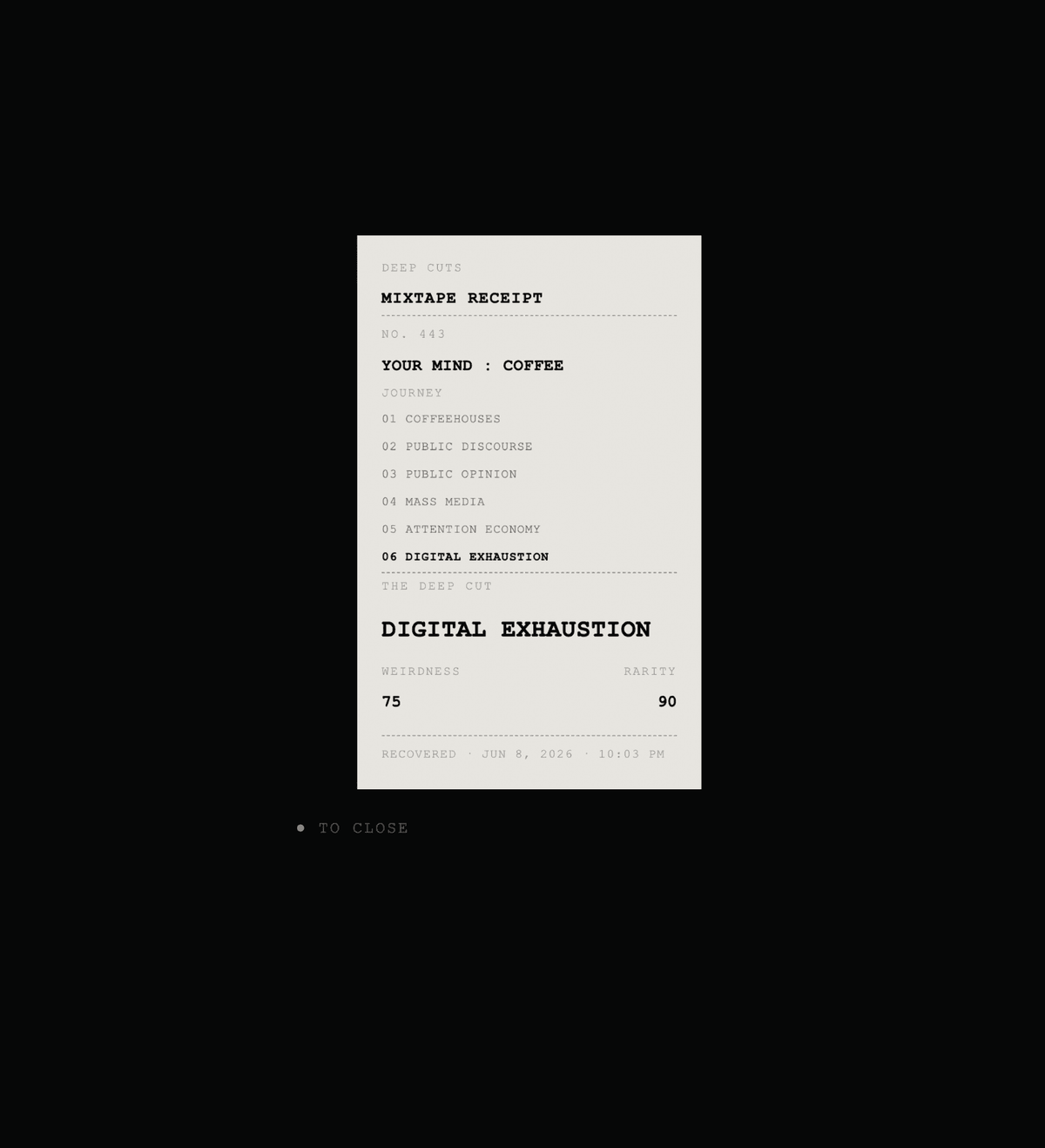
product thesis
the answer is the part you forget. what you remember is the route you took to it, and no ai product gives you that to keep. deep cuts throws the answer away and prints the route.
why this one is different
every other ai product is racing to hand you a conclusion.
this one will not give you one at all.
it is the only version of an ai interface i know of where the output is an object rather than a paragraph, and where going slower is the feature.
the systems thinking
signal
a journey starts from one word. numbers and non-words resolve to a random signal, and anything offensive is lifted to a larger umbrella word rather than refused.
directions
every step offers exactly three, and each one has to belong to a distinct genre. the model is re-asked until they are genuinely different, or they are repaired deterministically.
the bridge fact
each jump has to be justified by a specific connecting fact between the two nodes. a generic one is rejected and regenerated, because a chain of vague links is not a journey.
length
five signal stops, then a deep cut. the end is fixed rather than open, so the artifact has a shape.
receipt
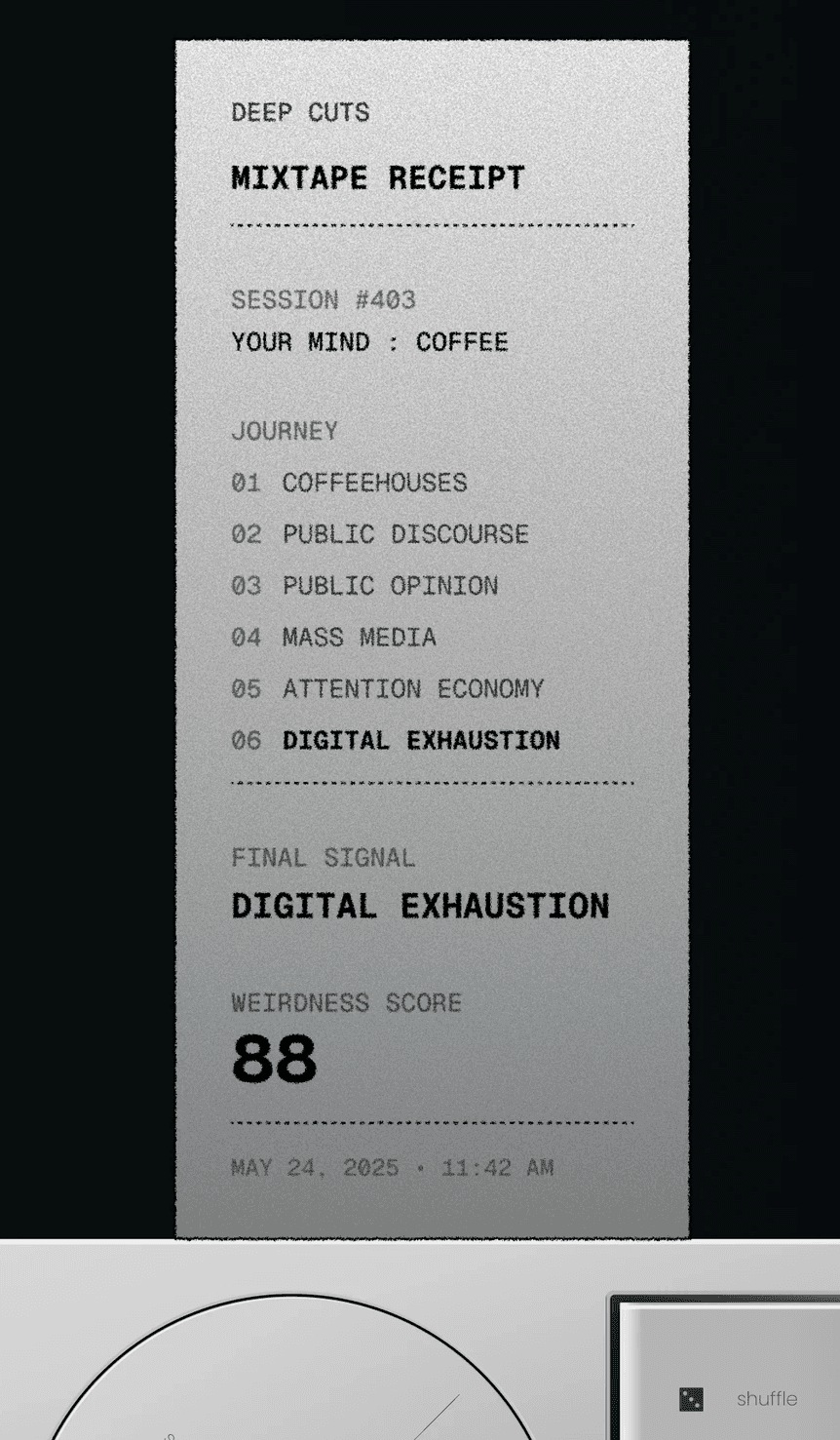
the path, the facts, a weirdness score and a rarity score, printed and filed. stored on the server and in local storage, so the archive survives either one going away.
key design decisions
three directions, never more
why
early explorations maximized options and the result was decision paralysis. a wall of suggestions is the same as no suggestions.
tradeoff
three is arbitrary and it hides most of the space. a direction you would have loved is often not on the table.
result
limiting every step to three created a much stronger sense of authorship while keeping exploration open-ended. you are choosing rather than scanning.
end it at five, whether or not you are done
why
an endless journey produces cognitive fatigue and destroys novelty. it also never produces an artifact, because nothing that does not end can be collected.
tradeoff
the machine cuts you off mid-curiosity, which is exactly when you least want it to.
result
five stops then a deep cut. the limit is what turns a session into an object with a beginning and an end.
build it as an instrument, not an app
why
the interface had to argue against the speed and complexity of every other ai product, and hardware is the only visual language people already read as deliberate.
tradeoff
a console with focused controls is slower to use and less legible to someone expecting a chat box.
result
a hardware-era console that reveals a small set of meaningful choices at a time. the goal is not to maximize exploration but to make it intentional.
make the ending an object
why
most exploration tools end with an answer, which is the least memorable part and cannot be kept.
tradeoff
a receipt is only worth having if the journey behind it was good, so the whole system has to hold up for the artifact to mean anything.
result
a mixtape-style receipt with scores, filed in a personal archive as spines you can pull out. curiosity becomes collectible.
edge cases accounted for
a signal that is not a word
numbers, keysmashes and empty input resolve to a random signal rather than an error, because the machine refusing to start is a worse failure than it starting somewhere unexpected.
a signal nobody should type
offensive input is lifted to a larger umbrella concept instead of being rejected. the journey continues and the subject quietly changes.
the model going in a circle
directions are checked against the current node and the previous one, so the machine cannot offer you a self-loop or an immediate backtrack dressed as a new direction.
a weak connecting fact
the bridge fact is validated and regenerated up to three times. on the last attempt the best effort is accepted rather than failing the journey, because a stalled machine is worse than a soft link.
the model not answering at all
every failure, network, timeout, malformed body, collapses to one uniform failure handled in one place, so the interface never has two different ideas about what went wrong.
the archive with nothing in it
scores are derived deterministically from the journey rather than asked for, so a receipt never prints as zero out of zero.